Ohio
Akron Children's Bets on Text-Based Mental Health Coaching — What It Means for Local Families and the Youth-Care Economy
By Chris Yuen · July 3, 2026
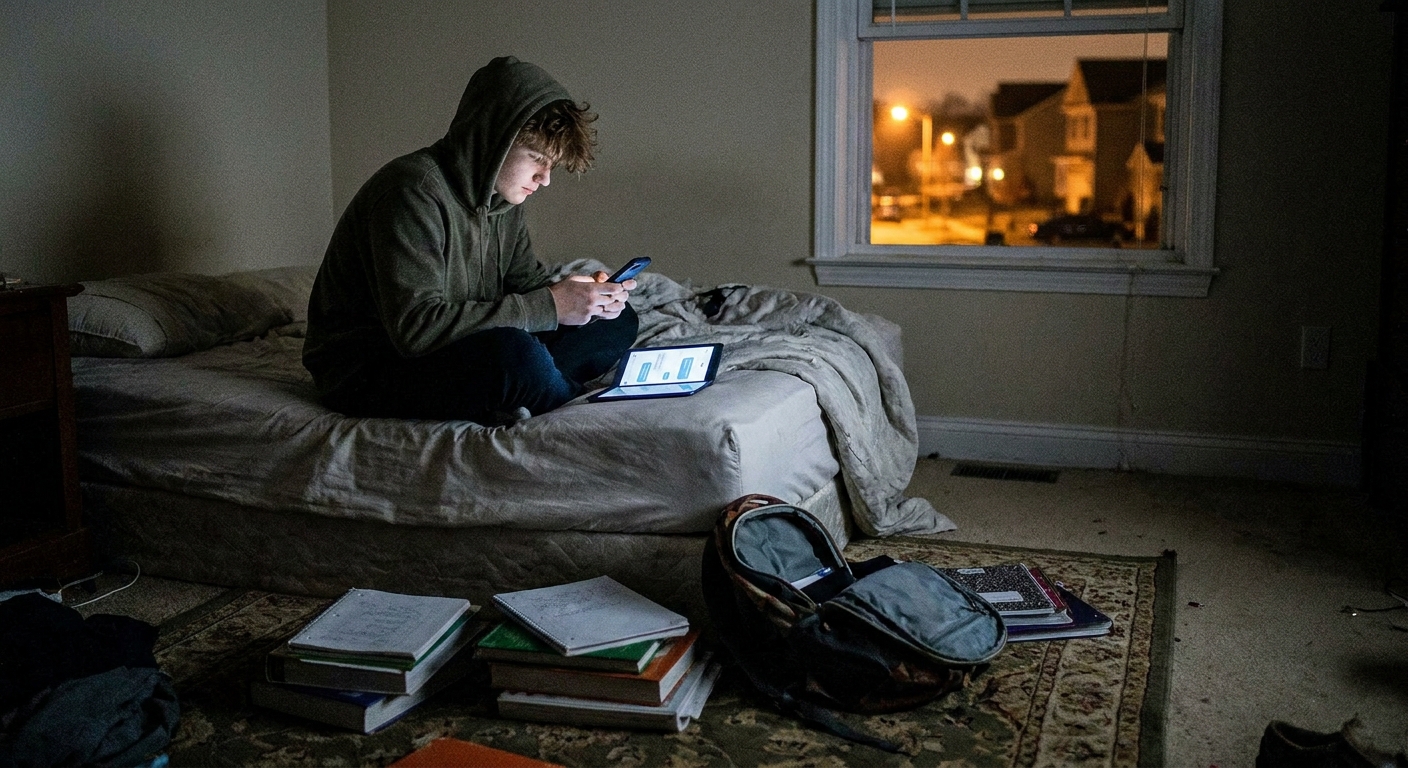
When your teenager's next therapy appointment is a year away and the emergency department is the only crisis option, a text message from a trained coach at 2 a.m. sounds like relief. Akron Children's Hospital is betting that's exactly how families will receive its new partnership with Sonar Mental Health—24/7 text-based well-being coaching for adolescents, launched in mid-June 2026 across five primary care practices with no appointment needed, no cost, and for teens 13 and up, no parental permission required. The question isn't whether desperate families will use it. The question is whether offering it lets the health care system off the hook for building the clinical capacity the region actually needs.
The service targets patients with mild to moderate stress, anxiety, or sadness and uses AI tools in the background to enhance triage, escalation, documentation, and care navigation. The partnership marks Sonar's first relationship with a children's hospital, and Akron Children's plans to expand the program systemwide after the initial rollout.
Dr. Eva Szigethy, Lois C. Orr Chair of Pediatric Psychiatry and Behavioral Health at Akron Children's, says the platform combines "trained well-being coaches with a structured, clinically informed oversight, quality assurance and escalation model." The question for parents is whether that structure can substitute for what it cannot provide: a licensed clinician who can diagnose, prescribe, and treat.
The Gap the Hospital Is Trying to Fill—and the Numbers Behind the Crisis
Ohio faces a severe shortage of adolescent mental health providers. Seventy-five of 88 counties are designated mental health professional shortage areas as of July 2025. The average wait for a child psychiatry appointment is 365 days. The state has just one child psychiatrist per 7,105 children.
Some 119,000 Ohio children ages 3–17 have depression, and 53.5% did not receive mental health care in 2021–2022. Overall, 60% of Ohio youth who needed mental health treatment did not receive it. Mental health-related emergency department visits for Ohio children increased 353% between 2009 and 2019, and once there, 32% of children waited over 12 hours for psychiatric admission; 13% waited over 24 hours. The state offers only 11 facilities with youth inpatient psychiatric services and none in Southeastern Ohio. In 2021, 98% of Ohio behavioral health organizations reported they were unable to meet demand.
The Akron metro area faces documented access barriers including lack of public transportation and limited provider availability. Over 88% of behavioral health organizations statewide struggled to retain staff in 2021, with more than 77% experiencing higher turnover and many positions remaining open for two to six months or longer.
What Text Coaching Is—and What It Isn't
Into that vacuum steps Sonar Mental Health, a Stanford, California-based company serving more than 25,000 young people across the U.S. Every conversation is led by a trained Well-Being Coach—a real human, not AI. Dr. Szigethy emphasizes that "a human is always communicating with the user" and patients do not interact with AI. AI operates behind the scenes to support coach workflows, documentation, and risk flagging.
Sonar coaches have psychology backgrounds and complete rigorous training in adolescent communication, crisis recognition, and evidence-based support techniques, working under direct supervision of Sonar's licensed Clinical Team. They are not licensed therapists and do not provide clinical services or therapy. Eighty-three percent of coaches identify as BIPOC and 40% as LGBTQIA+, with many having lived experience with mental health challenges. Topics include academic stress, social conflicts, dating and breakups, bullying, anxiety, depression, grief, and sleep issues.
That distinction carries weight. Coaches cannot diagnose conditions, prescribe medication, or treat severe mental illness. The service is suitable only for individuals dealing with wellness concerns, not for those with suicidal thoughts or conditions requiring diagnosis and medication. Sonar is not designed for emergencies; users in danger are directed to call 911 or 988. The platform performs screening and triage to identify risk levels and facilitates warm handoffs to higher levels of care, following jointly defined safety and escalation protocols with Akron Children's. It also maintains connection after discharge from acute or intensive care and coordinates transitions into clinical services when needed.
The Economics of Coaching Versus Care—and Who Bears the Cost
Sonar secured $2.4 million in pre-seed funding in 2024. Its primary business model involves partnerships with school districts funded through public grants rather than insurance reimbursement. The Akron Children's partnership represents its first foray into the pediatric health care system market.
Mental health coaching generally cannot be billed to insurance. Category III CPT codes for health and well-being coaching introduced in 2020 are generally not reimbursed by public or private payers. Coaching services are less regulated than licensed therapy, with no universally recognized regulatory body or standardized licensure.
That economic structure matters. Akron Children's provides comprehensive mental health services including an inpatient psychiatric unit recently expanded to 24 beds, outpatient therapy programs, and behavioral health integration embedded in 47 pediatric practices. Its TABBICAT model (Triage, Assessment, Brief Behavioral Intervention, Care Coordination, and Tracking) is implemented in 20 primary care practices, with approximately 80% of costs billable to insurance.
Text-based coaching allows a single coach to serve multiple patients simultaneously via asynchronous communication, fundamentally changing the staffing economics compared to one-on-one clinical appointments. The service is offered at no cost to eligible patients, meaning the hospital absorbs the expense as part of care infrastructure rather than generating billing revenue. Seventy-three percent of schools using Sonar do not meet the recommended counselor-to-student ratio of 250:1, illustrating the workforce gap that tech platforms step in to fill.
For Akron Children's, the strategic calculus is clear: absorb the cost of text coaching now to prevent costlier emergency department visits and inpatient admissions later, while stretching clinical staff to cover cases that genuinely require licensure and prescription authority. For Sonar, the partnership opens a new revenue channel in pediatric health systems, leveraging the same staffing model that lets school districts offer mental health support without hiring licensed clinicians.
For families, the bargain is more ambiguous: free, immediate access to a trained human—but one who cannot diagnose, prescribe, or provide therapy. The hospital frames this as filling a gap. Parents are left to assess whether it papers over a hole that should be filled with actual clinical capacity instead.
The Evidence Gap—and What Families Are Being Asked to Trust
Sonar has no peer-reviewed studies evaluating its effectiveness yet, though the company is working with academic partners including Stanford and UPenn on controlled trials. Akron Children's and Sonar plan to launch a research study assessing Sonar's impact within the TABBICAT model.
According to Sonar's internal 2024–25 school year data, students using Sonar attended 2.8% more school days (95.33% vs. 92.51% attendance) compared to non-users. Users had 18.7% higher GPA (3.10 vs. 2.61). Eighty percent of users report feeling supported and 75% demonstrate greater than 20% improved well-being. Schools using Sonar saw a 33% year-over-year reduction in referrals to clinicians and a 25% reduction in student disciplinary incidents. Between 20–40%+ of students in partner districts engage with the platform.
That reduction in clinician referrals cuts two ways. It could mean teens are getting the support they need without overwhelming the clinical system. Or it could mean the platform is absorbing demand that should trigger a clinical referral, delaying access to diagnosis and treatment.
Independent research shows that text-based chat counseling is more effective than waiting-list controls in reducing depressive symptoms in adolescents ages 15–19 and can reduce anxiety to a degree comparable to traditional face-to-face counseling, with benefits persisting at least one month post-intervention. Virtual one-on-one coaching can address anxiety and depression in youth efficiently, with over 95% of participants showing clinically significant improvements; reliable improvement is often observed after just two sessions, with stable, lasting benefits after six. The evidence base distinguishes between text-based support for mild to moderate concerns—where it shows promise—and severe mental illness, where it is not intended to replace clinical treatment.
What Parents Should Know Before Their Teen Opens the App
Text-based coaching through Sonar is appropriate for teens dealing with mild to moderate stress, anxiety, sadness, academic pressure, social conflicts, relationship issues, bullying, grief, or sleep problems—everyday challenges that feel overwhelming but don't constitute a mental health emergency. It can be especially useful after hours, between therapy appointments, or for teens who aren't yet comfortable seeking help face-to-face.
It is not appropriate for teens experiencing suicidal thoughts, severe mental illness, active self-harm, or conditions requiring diagnosis and medication. Red flags that a teen needs more than coaching include worsening symptoms despite regular engagement, talk of self-harm or suicide, inability to function at school or home, or symptoms interfering with daily life for more than two weeks.
Because no parental consent is required for teens 13 and up, parents may not know their teen is using the service unless the teen chooses to share. Parents should ask their teen's primary care provider how text coaching fits into the child's overall care plan, what the escalation protocol looks like if concerns intensify, and whether the teen is also on a wait list for clinical services.
The real test will come not in how many teens send that first text at 2 a.m., but in what happens when coaching isn't enough—whether the bridge this program builds actually leads to clinical care, or just makes the gap easier to ignore. For Akron families living with a one-year wait for a psychiatrist appointment, the difference between a stopgap and a solution isn't philosophical. It's the difference between a teen who gets well and one who learns to manage while staying sick.