Government
Summit County Posts Strong Revenue Numbers, but Officials Eye Future Budget Shortfalls
By Terrence Okafor · July 2, 2026
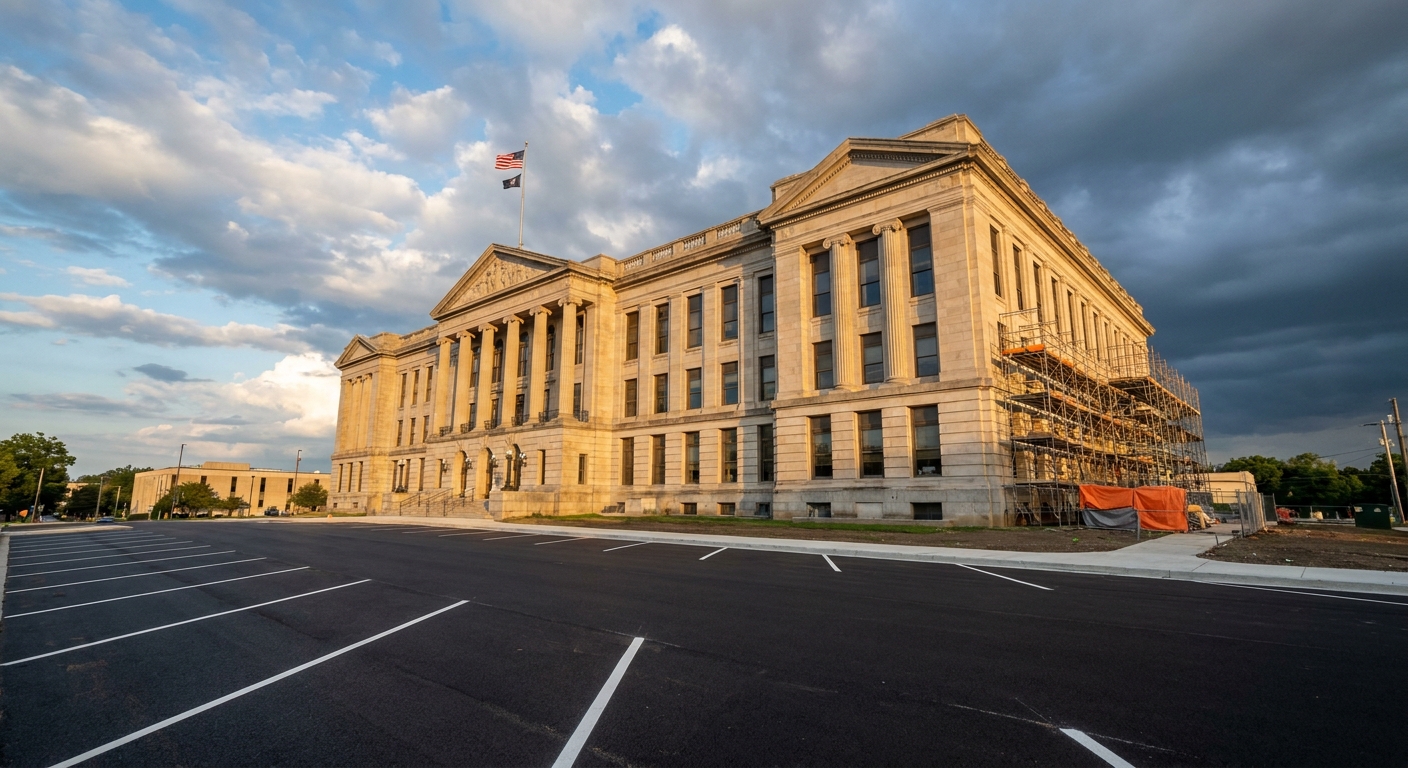
Summit County just banked $178.5 million—its strongest revenue year in recent memory—and two months later voted to spend $41.8 million more on courthouse upgrades, road projects, and IT systems. But the county's own finance director says if spending continues at this pace, the money runs out in 2028.
Summit County closed out 2025 with revenue hitting approximately $178.5 million, up 4.85% from the year before. On March 2, 2026, County Council voted unanimously to approve $41.8 million in new appropriations.
Here's the problem: Finance Director Phil Montgomery's conservative five-year forecast projects deficit spending in 2028 and 2029 if the county maintains current operations. "If we stay business as usual, we're going to be in deficit spending in 2028 and 2029," Montgomery warned.
So why is Council approving tens of millions in new commitments while its own finance chief is waving a yellow flag?
The $41.8 million appropriation included $2.5 million to close engineering projects, $13,000 for the probate court, grants for the Summit County Common Pleas Court and domestic relations court, funds for internal equipment leasing where the county buys equipment and leases it to departments, and appropriations for information technology funds. Council also zeroed out capital project funds from finished projects. Most of that looks like housekeeping.
But zoom out, and the county has locked itself into something bigger. Summit County's 2026-2031 Capital Improvement Program commits $20 million in new debt for facilities upgrades and infrastructure projects. County capital projects are financed through two primary mechanisms: General Obligation Debt using long-term bonds financed by unvoted property tax levies, and Revenue Bonds backed solely by General Fund revenues such as investment earnings, fees, and fines. That's borrowed money the county will owe back no matter what happens to revenue in three years—and those payments start coming due around the same time Montgomery projects deficits.
The General Fund has transferred a cumulative $66.8 million to capital projects from 2001-2025, and the General Fund Capital Improvement Program holds a $13.2 million unencumbered balance as of 2026. The Development Finance Authority of Summit County has issued $185.645 million to fund 50 projects as of December 31, 2024, with an outstanding principal balance of $93.615 million. Each new bond adds a fixed cost that has to get paid whether revenue grows or shrinks.
Montgomery's forecast assumes moderate growth with normal operating cost increases of 2-3%. While the county expects to add to its unencumbered cash in 2026 and 2027, the deficits follow in 2028 and 2029.
Some of the revenue propping up today's numbers won't last. Montgomery identified investment earnings and sales tax as the two most volatile revenue areas to monitor, and noted that property transfer tax revenue was exceptionally high in 2025 due to dropping federal interest rates—a temporary boost that may not repeat.
Then there's health insurance. Summit County's employee benefits fund dropped from $20 million five years ago to $1.2 million now, an $18 million decline primarily caused by rising healthcare cost premiums and higher-than-expected claims that outpaced premium collections. In 2025 alone, the county experienced $300,000 in deficit spending on employee benefits, bringing in $76.5 million in premiums but spending $76.8 million. Healthcare cost premiums are forecast to increase by 7.5% in 2026 and 5% annually from 2027-2029.
County officials are working with consultants and believe they are "turning in the right direction" regarding the balance between premiums collected and money paid out. State auditors previously noted the fund had "too much money" five years ago, suggesting the current drawdown partially reflects earlier overfunding being corrected. Still, a fund that once had significant cushion now has almost none. If claims spike or another budget shock hits, there's not much left to catch it.
The county overall has $36.4 million in unencumbered cash, representing 20.5% of operating expenses—above the Government Finance Officers Association minimum recommended reserve of 16.7%. The general fund added $890,000 in unencumbered cash in 2025, bringing its total to $11.1 million.
So the county isn't broke. It has options. But those reserves raise a question: Is the plan to spend them down when the deficit arrives, or to cut spending before it does?
To prevent projected deficits, the county may need to reduce spending in professional services and potentially scale back non-mandated, locally funded supports across departments, though no specific departments are officially slated for cuts yet.
Summit County's 2024 operating budget was $674.1 million, with major funds including Children Services, Alcohol, Drug Addiction & Mental Health Services, Emergency Management, Public Safety, and Sanitary Sewer Services. The county has not yet identified which of these service areas are mandated by state law versus discretionary local enhancements vulnerable to cuts, leaving residents uncertain about which programs could face reductions. Summit County received $7.8 million from Ohio's state capital budget for community and facility projects, providing some relief for capital needs but not addressing operating budget shortfalls.
Council unanimously approved the appropriation without recorded public debate about the tension between new spending and projected future deficits. Summit County Council consists of 11 members: President Erin Dickinson (At-Large), Vice President Christine Higham (District 6), and nine other representatives. No council members are on record challenging the appropriations or questioning long-term sustainability during the March vote—an accountability gap residents should watch in future budget deliberations.
A unanimous vote means either everyone agrees the spending makes sense—or no one wants to be the politician who votes against courthouse grants and road projects while revenue still looks strong.
Montgomery has held his role since January 2022, overseeing more than $1 billion in financial transactions and budget allocations across all county departments. His five-year forecast will be updated as revenue data comes in, particularly for the volatile investment earnings and sales tax categories, making his next presentations critical watchpoints for whether deficit projections worsen or improve.
The county has three years to close a gap that its finance director says is coming. Council can cut spending now, while there's time to plan. It can bank on revenue surprises to paper over the hole. Or it can wait until 2028 and make the cuts with no room left to soften them. What it can't do is approve tens of millions in new debt and pretend Montgomery's warning doesn't exist.